i
The 54th HK Arts Festival .Feature
2026.01.02

Under an Illusion: The Choir That May Not Be There

Text / Adam Wright

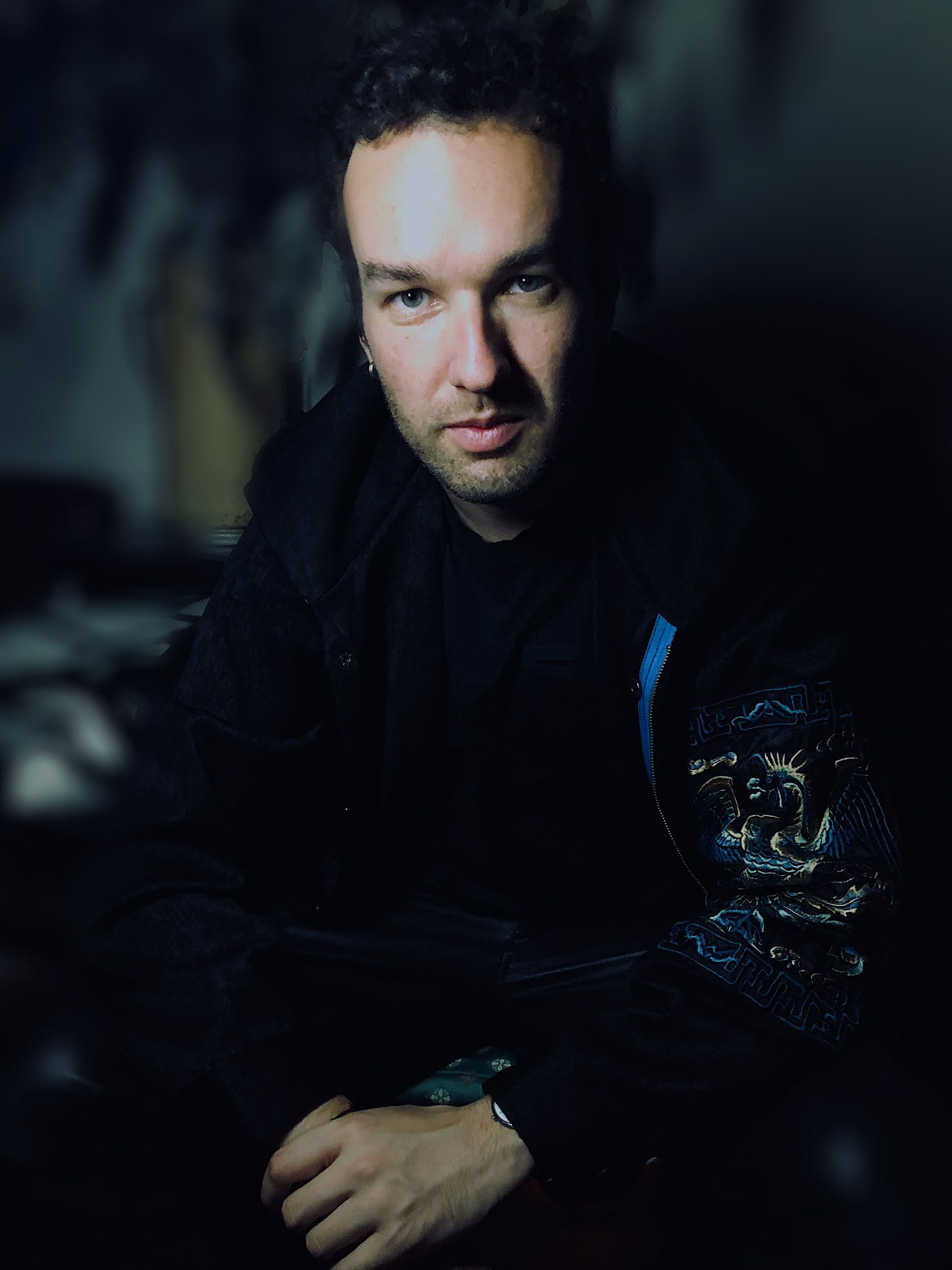
"In the past 50 years, there's been immense pressure on classical music to revolutionise itself. Classical music generally doesn't move unless it has to," says composer Professor Eugene Birman, Associate Director (Internationalisation) and Associate Professor at the Hong Kong Baptist University's Academy of Music. And Birman is doing his part to help push the music forward with a concept that will come as a surprise to many Festivalgoers.

He points out that the development of Western classical music was driven by the invention of new technologies, and sophisticated instruments such as the violin were perfected more than 300 years ago. But since then, advancement has been incremental at best—or non-existent at worst.

However, the Gulbenkian Foundation, located in the capital of Portugal, Lisbon, provided Birman with the perfect opportunity to innovate. The foundation has long been committed to promoting the arts, philanthropy, science and education, but saw its Gulbenkian Orchestra and Choir, and Gulbenkian Auditorium, shut down during the pandemic—as was most cultural life.

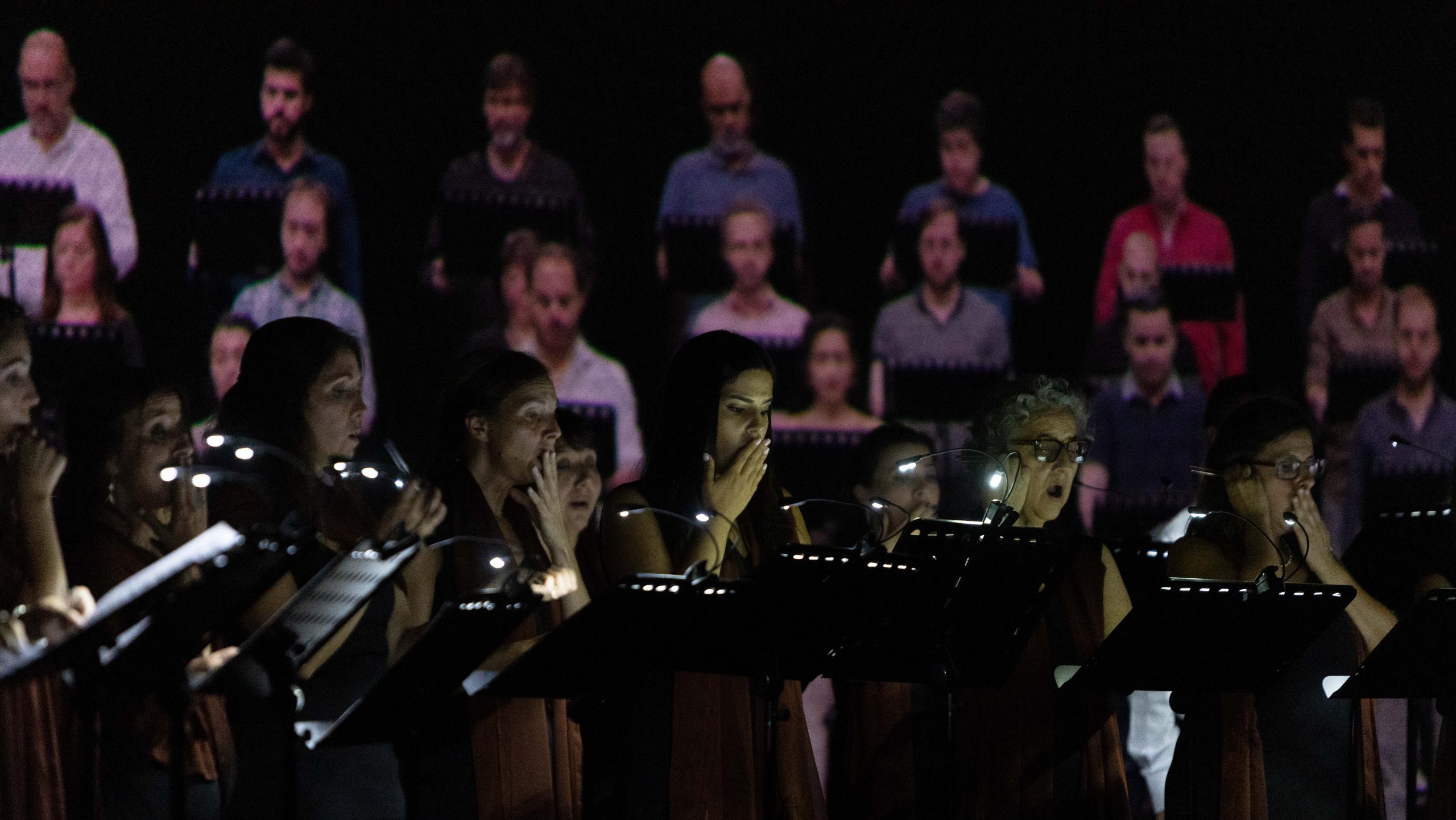
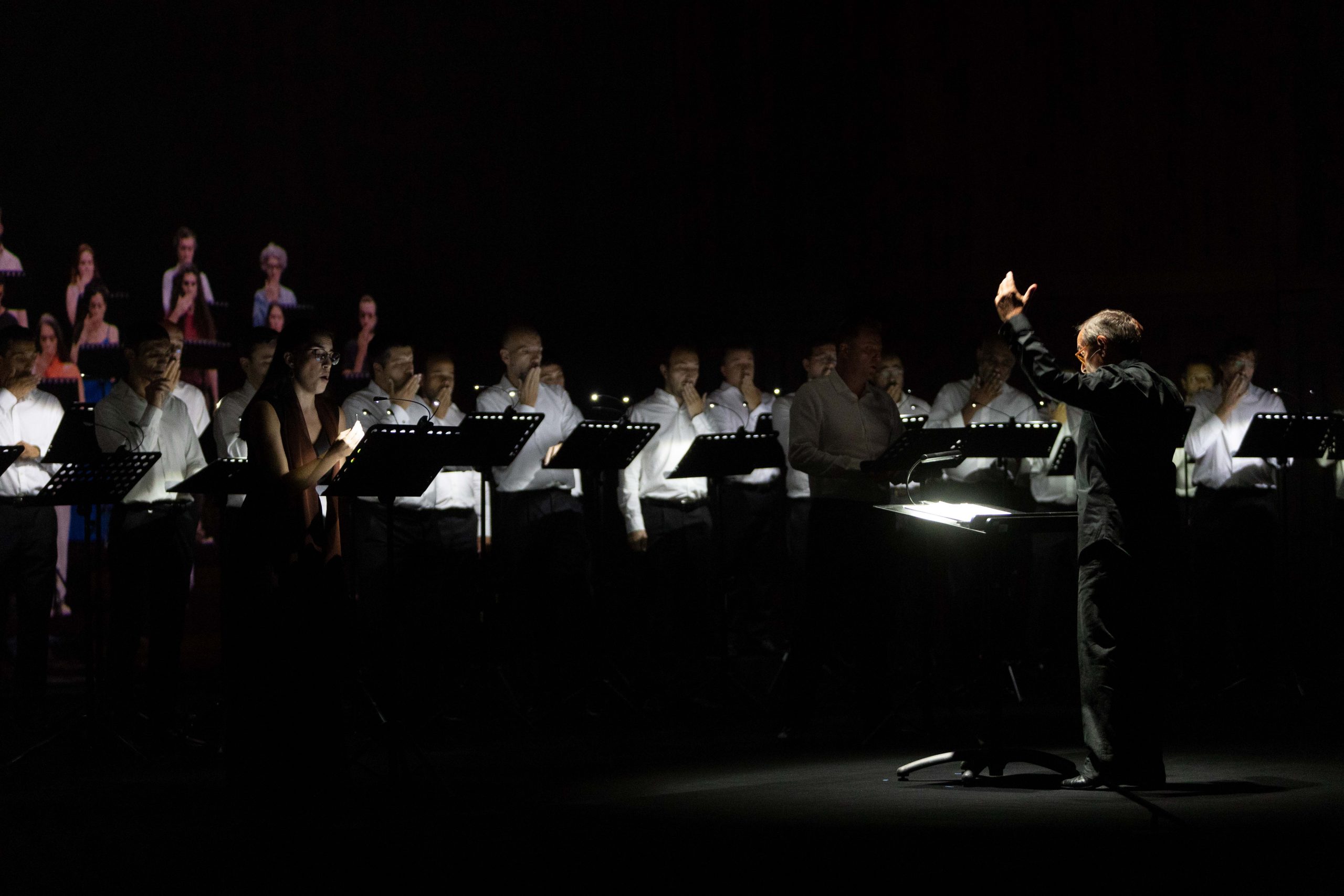
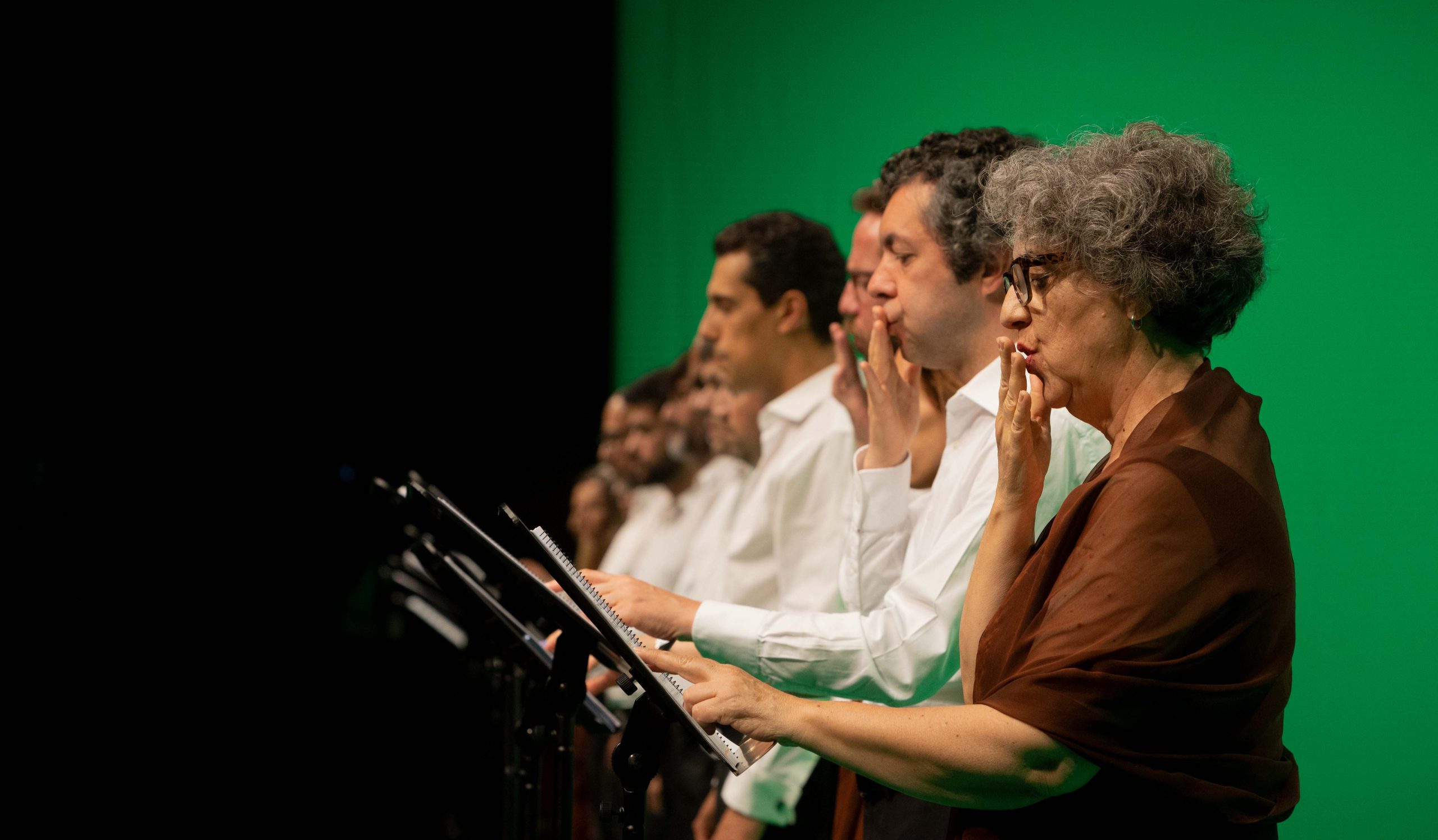
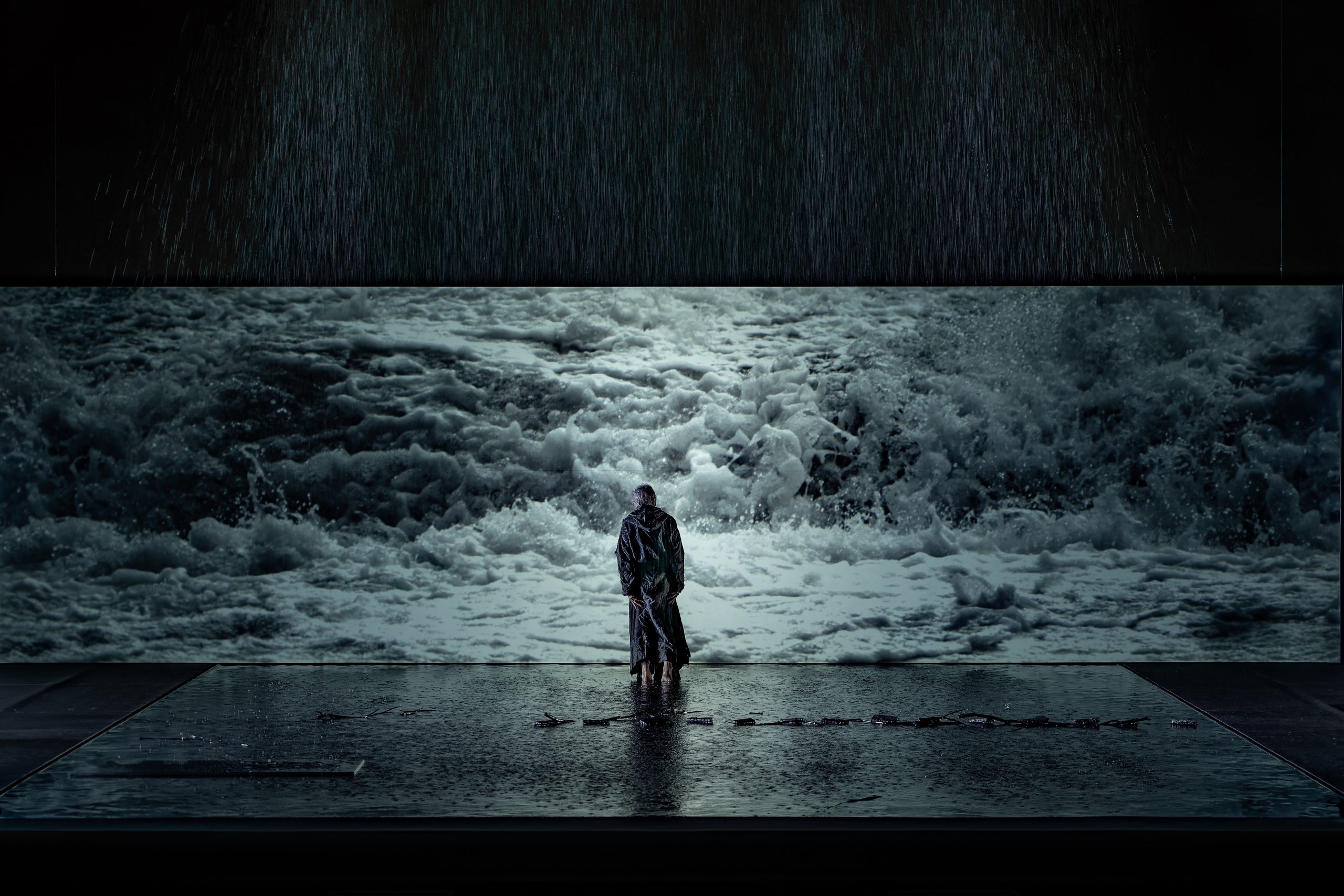
In 2021, to mark the return of its concert activities, the Foundation asked Birman to conceive a commemorative piece, and then commissioned acclaimed Portuguese writer Djaimilia Pereira de Almeida to create a poem Os dias mais longos e os mais curtos ("The Longest Days and the Shortest Days"). With Giorgio Biancorosso, Professor of Music in the Faculty of Arts at the University of Hong Kong, acting as director and dramaturge, the work turned into something revolutionary: half of the Gulbenkian Choir members on stage are projected, and not really there at all.

They describe this work as a "tech cantata", with Birman explaining: "Orchestras and choirs were performing in empty concert halls and streamed to a virtual audience during Covid. We thought: what about when the pandemic is over? That's what this work represents—a reversal of the pandemic scenario, using a virtual choir playing to a live audience."

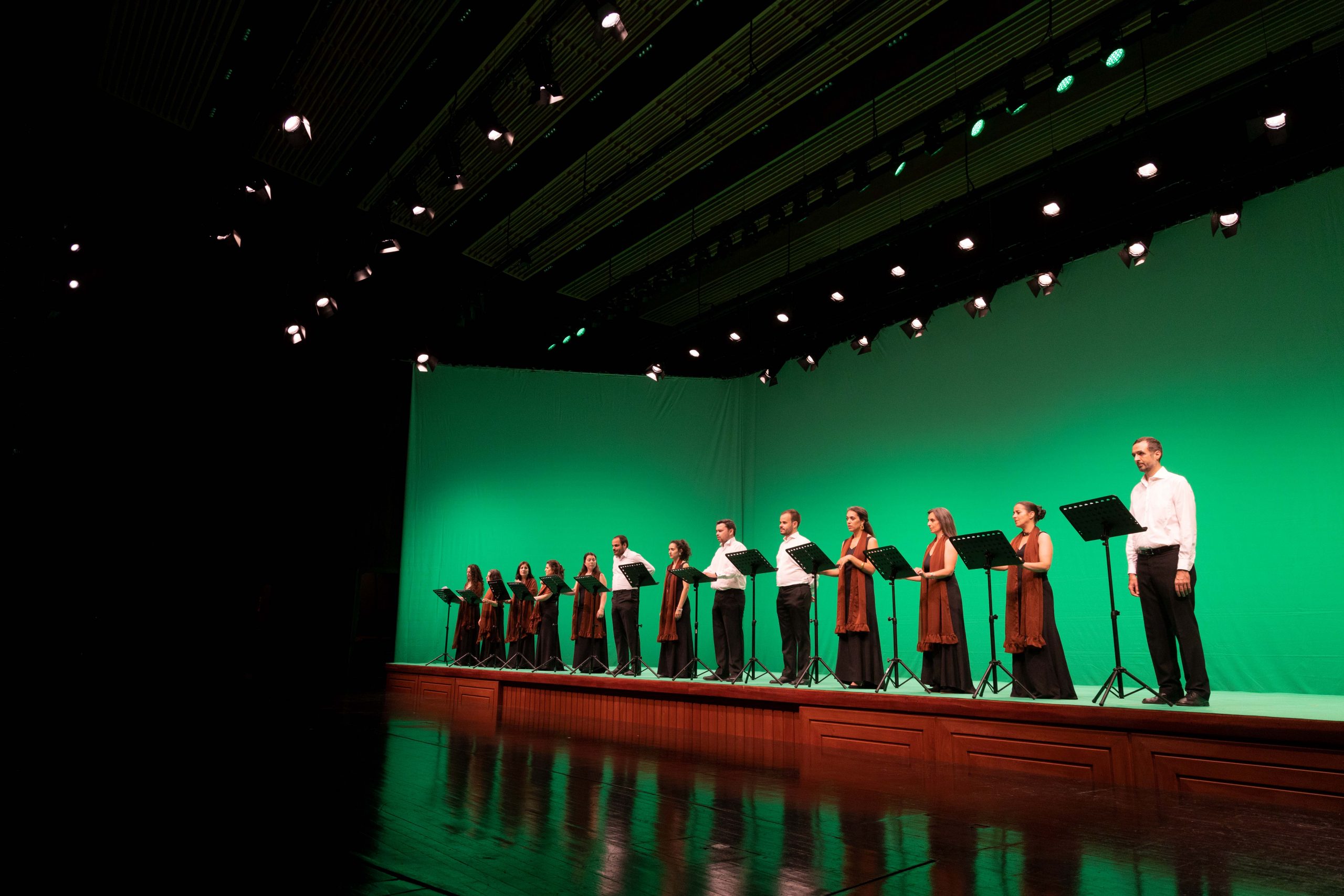
Biancorosso says the Gulbenkian Choir was first filmed in Lisbon singing Birman's score live against green screens, and the images then digitally recomposed in a high resolution to create a plausible virtual choir.

During Os dias, the virtual choir is projected behind 40 live Gulbenkian singers and the results are remarkable. "We wanted to see how far we could go … The audience doesn't realise that what they've been seeing wasn't real. This had never been done in a concert hall before," Biancorosso says.

But what happens when the illusion is broken and audience members realise they've been tricked? "Many people have applauded because they were so surprised—they thought they were seeing a real choir. One key component in making people believe is sound—the audio and video reinforce one another in this illusion."

Miguel Sobral Cid, Deputy Director of Music at the Gulbenkian Foundation, had been following Birman's vocal, operatic and vocal/tech compositions, and he knew he was the perfect composer to transform Almeida's poem into a work for large choir. Sobral Cid explains that the poem and the large choral work were created during the lockdown, stating: "As it coincided with the pandemic, [Birman] had the idea of playing with presence/absence, and the real/unreal."


As the virtual choir is projected in and out of the live performance, blurring the lines between reality and digital representation, Os dias offers a reflection on the passage of time and the resilience of the arts amid dark days.

"The poem focuses on the disconnect we all experienced during the pandemic as it affected the lives of performing artists, of musicians, actors," says Birman. "But it really transcends the question of the pandemic, because it's a commentary about what it means to be involved in culture in general."

Both Birman and Biancorosso hope to take the work—both its performance aspect and technology—further in the future. "There's a lot of potential to make it more real and more profound, philosophically and technologically," says Biancorosso.

At the HKAF the Gulbenkian Choir will also be performing an acapella concert featuring sacred works by Bach and Brahms, as well as compositions by Portuguese composers. Sobral Cid says: "The other concert represents a different dimension of the choir. Overall, the programmes put all characteristics of the choir on display and show its enormous flexibility."

Gulbenkian Choir—Tech Cantata: Os dias mais longos e os mais curtos (The Longest Days and the Shortest Days)

Date: 4 Mar, 2026

Venue: Auditorium, Kwai Tsing Theatre

Details: https://www.hk.artsfestival.org/en/programme/Gulbenkian-Choir


Gulbenkian Choir—Choral Treasures from Portugal

Date: 5 Mar, 2026

Venue: Concert Hall, Hong Kong City Hall

Details: https://www.hk.artsfestival.org/en/programme/Gulbenkian-Choir

ListClose

Acknowledgement