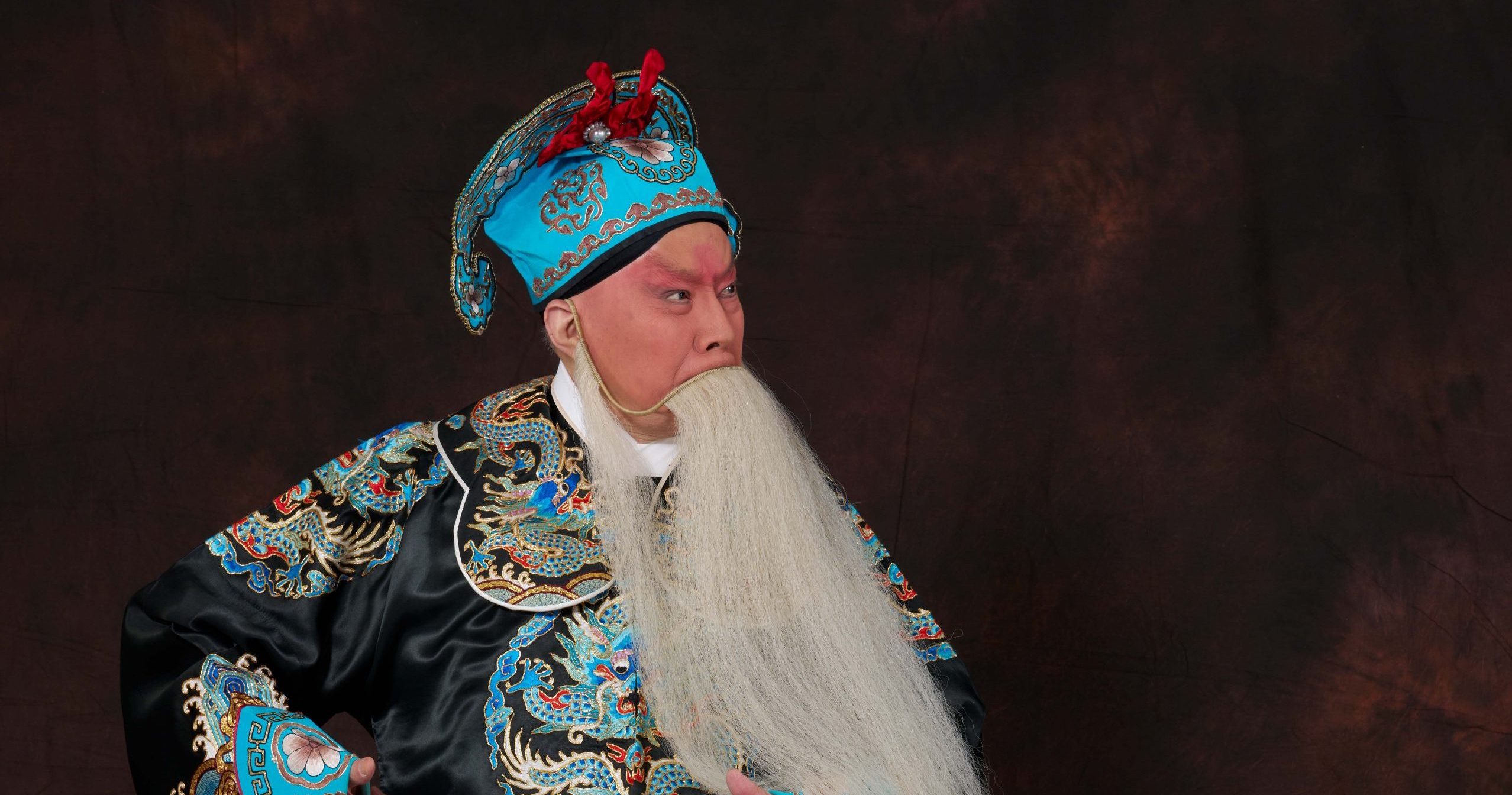



Chinese opera may seem to be most popular among older audiences, yet its traditions are far from old-fashioned. Whether it's Liyuan or Cantonese opera, artists are drawing on time-honoured conventions and refining the techniques they've inherited to keep the legacy of the art forms alive and relevant in the 21st century.
Reviving Liyuan opera with historical resonance
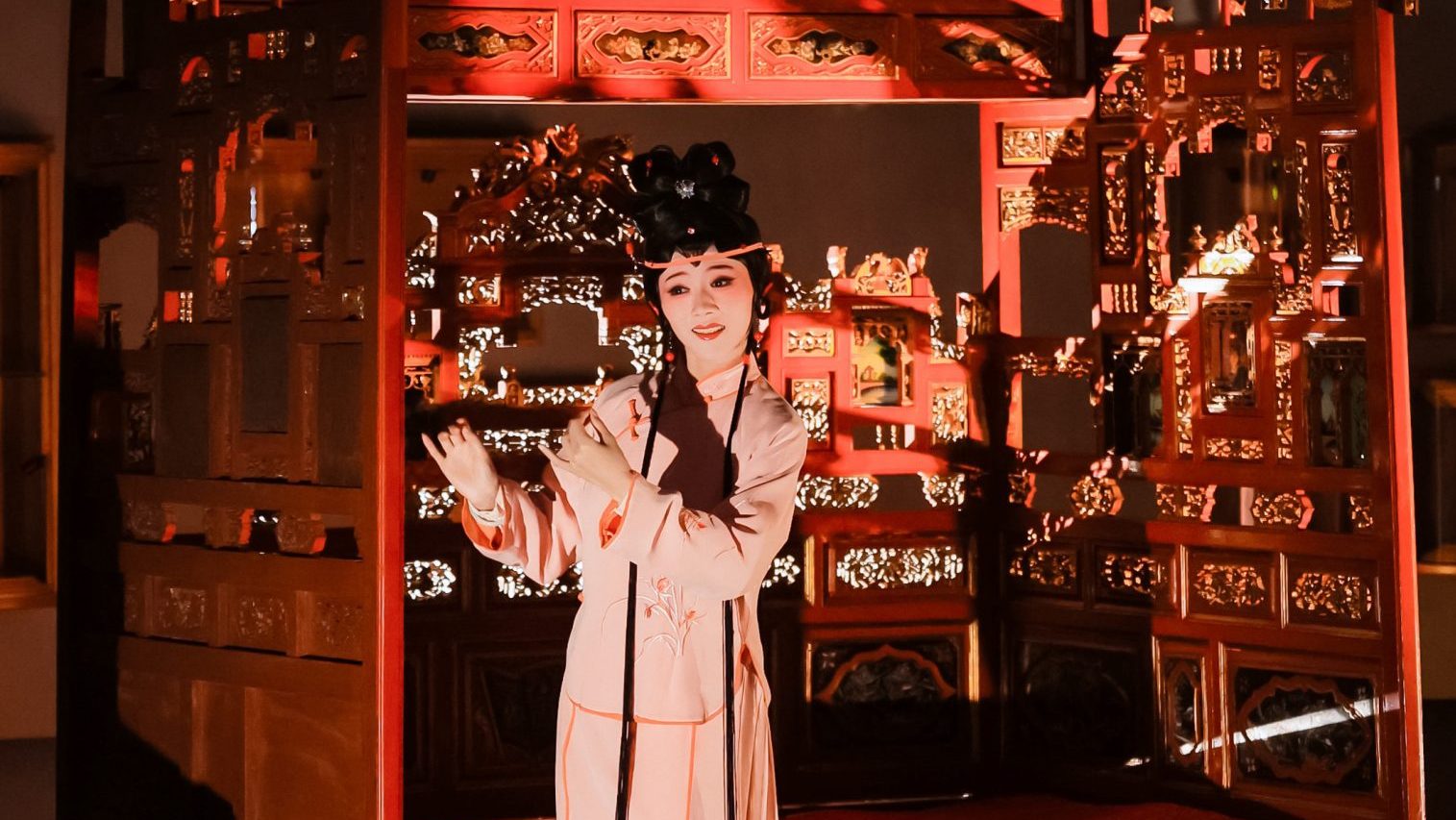
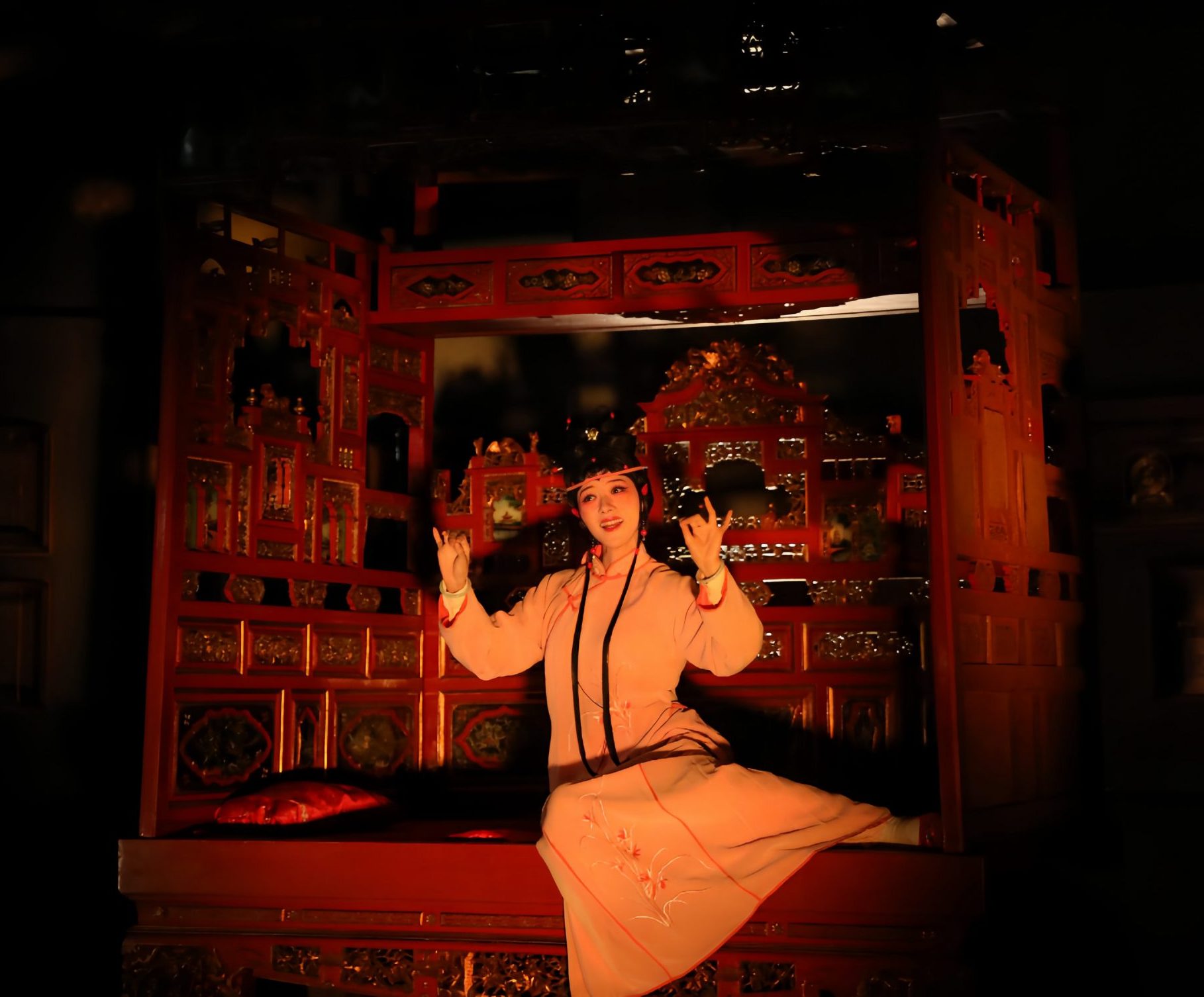
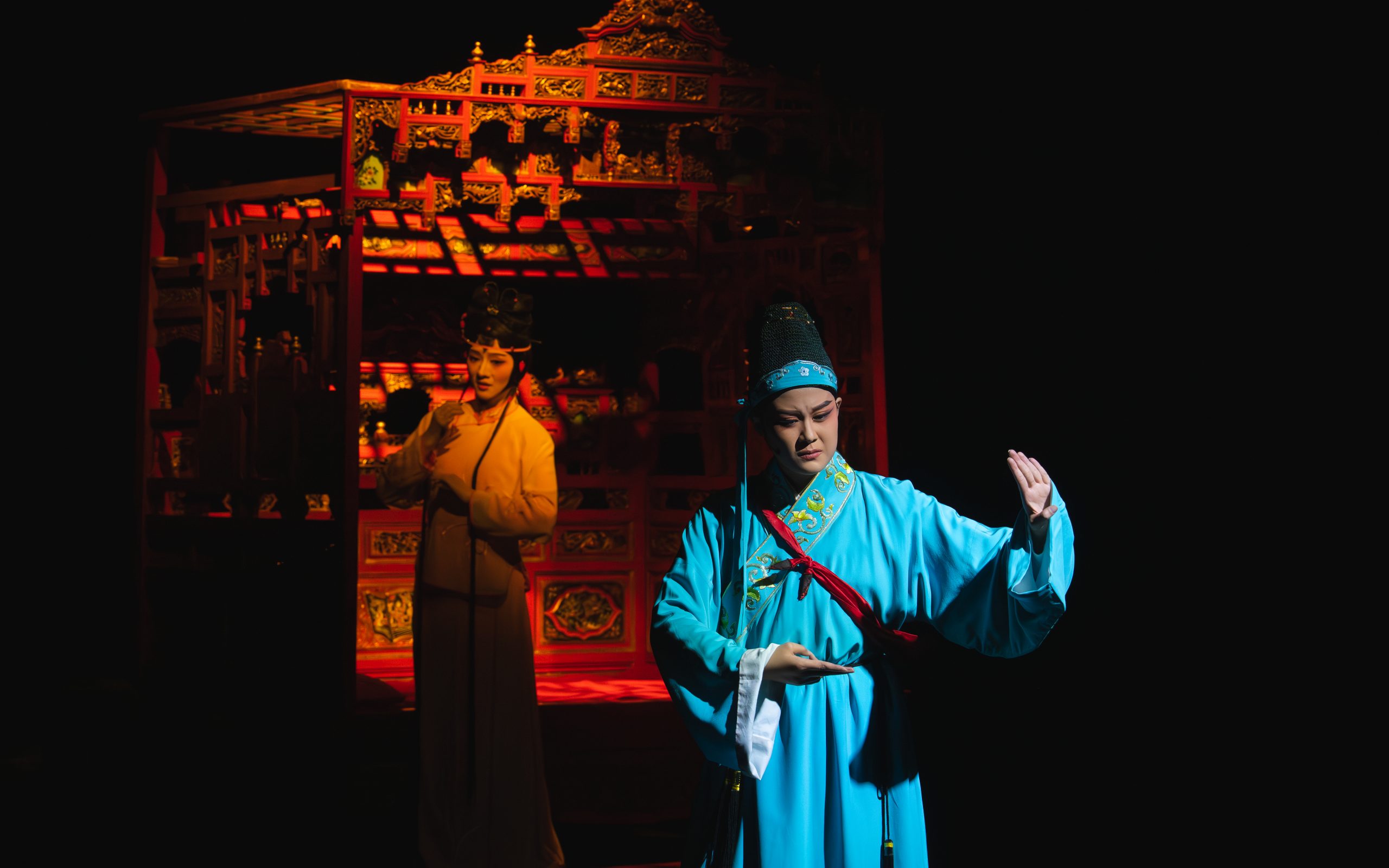
Liyuan opera, which originated in southern Fujian and later thrived in Shantou region, has a history spanning nearly nine centuries. Traditionally, every student of the art form began with Chen San and Wuniang. Embracing this formidable classic, young director Zeng Long of the Fujian Province Liyuan Opera Inheritance Centre (formerly the Liyuan Opera Experimental Troupe of Fujian Province) has received a commission from the Hong Kong Arts Festival to create a new work, Red Wedding Bed, placing a traditional crimson bridal bed at the heart of the stage. Wuniang reclines in her chamber, longing for her exiled lover Chen San, while at the opposite side of the stage, seven black-clad performers symbolise the seven types of roles in Liyuan opera, bridging centuries of tradition with the present.
Zeng says the production combines two of the troupe's classic versions. It opens with "Great Melancholy", an excerpt from the ancient Chen San script from the Xiaoliyuan ("Pear Garden Junior Troupes") school of Liyuan opera, in which Wuniang sings alone for 50 minutes, pouring out her sorrow into the night. "This thread is then connected to the Eastern China version* of Chen San and Wuniang, recounting their meeting, how they fell in love and their eventual decision to elope."
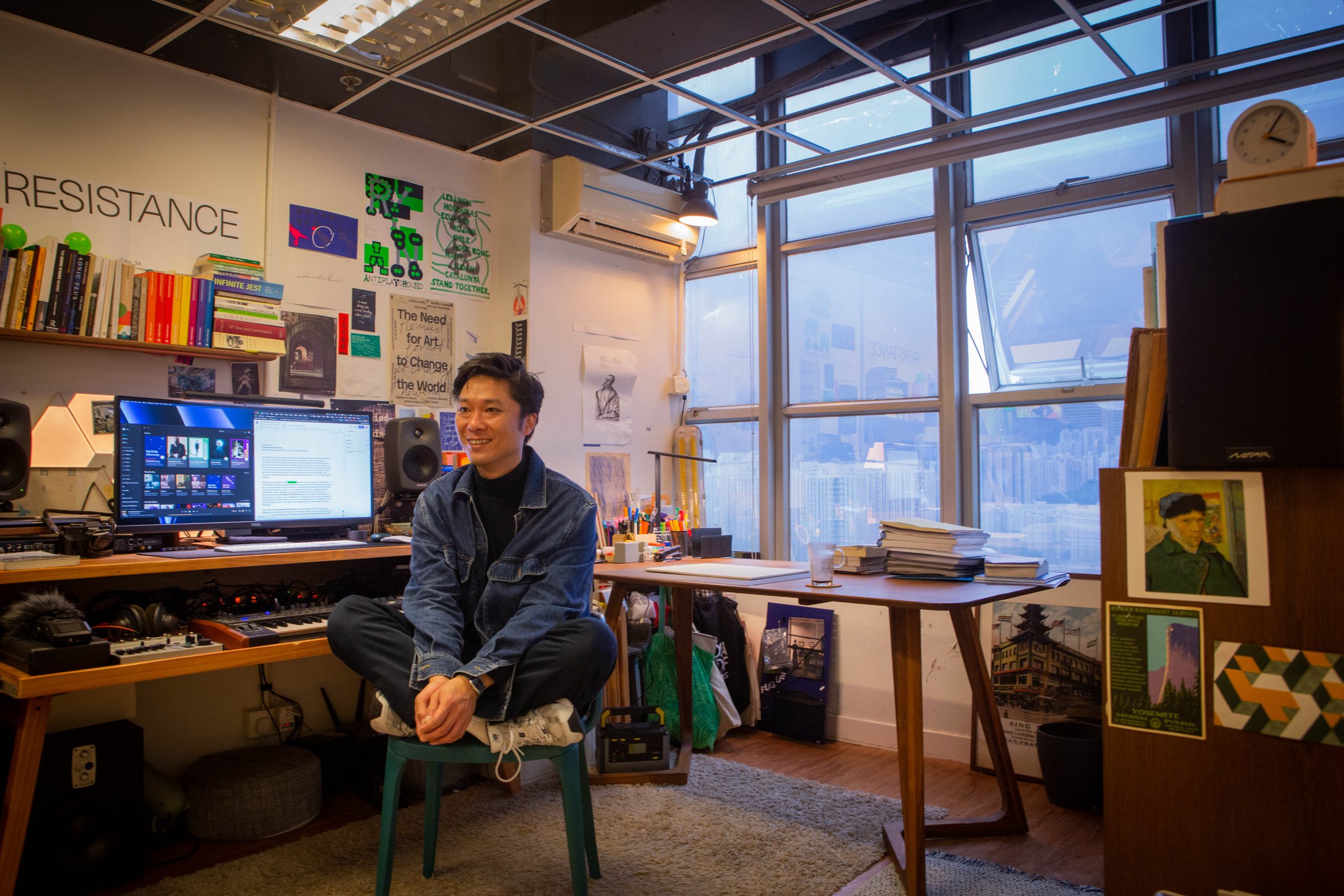
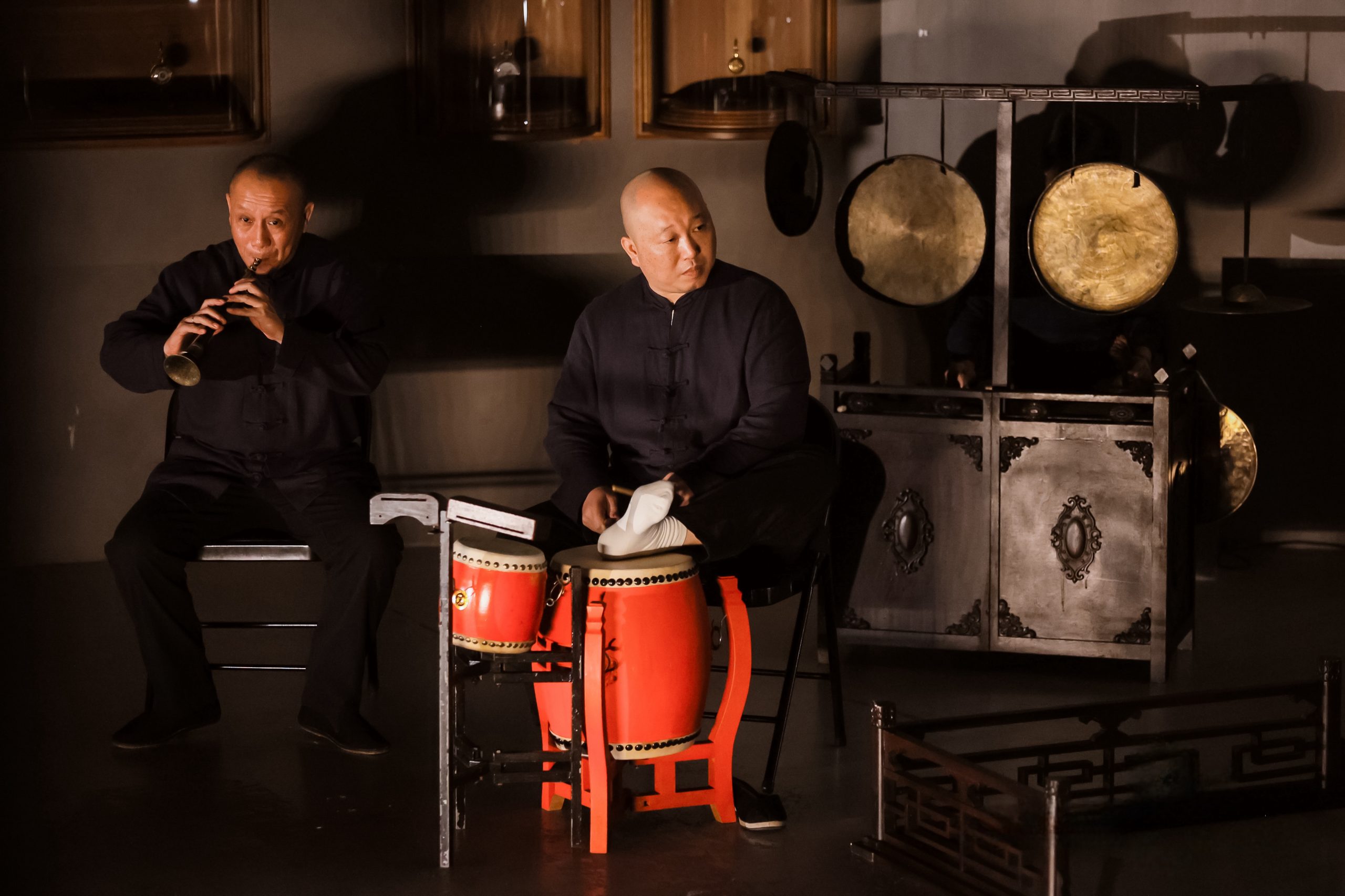
Local Cantonese opera creator Jason Kong has joined the production as dramaturge. Together with Zeng, he has conceived an open stage that allows performers to interact across different times and spaces. Despite the novel staging, the work remains rooted in the traditions of Liyuan opera. For example, the musicians are placed visibly on stage to perform traditional instruments such as the yajiaogu (foot-pressed drum), the nan'ai (small pipe) and the horizontally held southern pipa. Kong describes the music as steeped in history: "It is clean and delicate. The melodies are constantly varied within the pentatonic scale, yet never feel repetitive."
Traditionally, Liyuan opera was performed within a courtyard framed by railings known as goulan. Zeng incorporates this idea by placing adjustable railings at the four corners of the stage, which can expand, contract and rotate to create shifting performance zones. "These movable corners allow the audience to appreciate the performers' gestures from multiple perspectives," he notes.
To deepen his understanding of the art, Kong recently visited Quanzhou to observe rehearsals at the troupe's base. He was impressed by its unique character: founded in 1952, it remains China's only state-run Liyuan opera troupe. "Each year it trains new students, who join as full-time members upon graduation. The ensemble is like a close family, colleagues and mentors all at once, bound by a shared devotion to their art," he says.
Performers follow strict conventions governing movement, expression and stagecraft. Their basic repertoire of gestures, known as the "Eighteen Step Basic Directions", utilises precise physical details, such as furtive glances or flowing tears, to embody emotions such as melancholy or longing. Kong particularly admires the troupe's scholarly rigour: every new playwright must spend three years studying the troupe's archive before creating fresh scripts, ensuring that traditions are faithfully preserved.
Zeng Long's mother, the director and award-winning actress Zeng Jingping, grew up within the troupe. Yet as a child, Zeng had little affection for the art of Liyuan opera, preferring anime and pop culture. After graduating in acting, he worked in film and television, but soon grew tired of endlessly waiting for roles and the industry's superficial socialising. Taking a break, he joined the troupe to observer its tour in France, where he was astonished by the audience's enthusiastic response and his curiosity about Liyuan opera was re-ignited.
"I realised how many opera stories resonate with modern audiences. They are no different from the narratives of today's TV shows or K-dramas. What amazes me is that they were already being staged centuries ago," he reflects. Wuniang's defiance of feudal conventions in her pursuit of love and freedom is a perfect example. "And though the performance codes may seem rigid, they actually have immense scope for creativity. Like Lego blocks, the same set pieces can be recombined in countless new ways."
For Zeng, the troupe's balance of tradition and innovation is deeply connected to its roots in Quanzhou, a key port on the Maritime Silk Road during the Song and Yuan dynasties. The city's history of exchange has fostered a spirit of openness and inclusivity in the community. He even thinks that his mother is more experimental than he is, often urging him to take his adaptations further. To him, the movement, make-up and music of Liyuan opera are all inherently beautiful. His intent is not to change its essence, but to illuminate its traditional brilliance: "Our predecessors perfected the form long ago. It cannot be broken, only delicately embellished."
*The Eastern China version refers to the center's condensation of the ancient script of Chen San into a 10-act Chen San and Wuniang in 1954, and using this to represent Liyuan opera at the Shanghai Eastern China Opera Festival.
Fujian Province Liyuan Opera Inheritance Centre—Red Wedding Bed
Date: 21-22, Mar 2026
Venue: Studio Theatre, Hong Kong Cultural Centre
Details: https://www.hk.artsfestival.org/en/programme/Red-Wedding-Bed?